
Press kit
KESSLER: Orbital Incremental
Everything you need to write about or cover the game. All assets may be used freely in coverage, reviews and videos about KESSLER.
Description
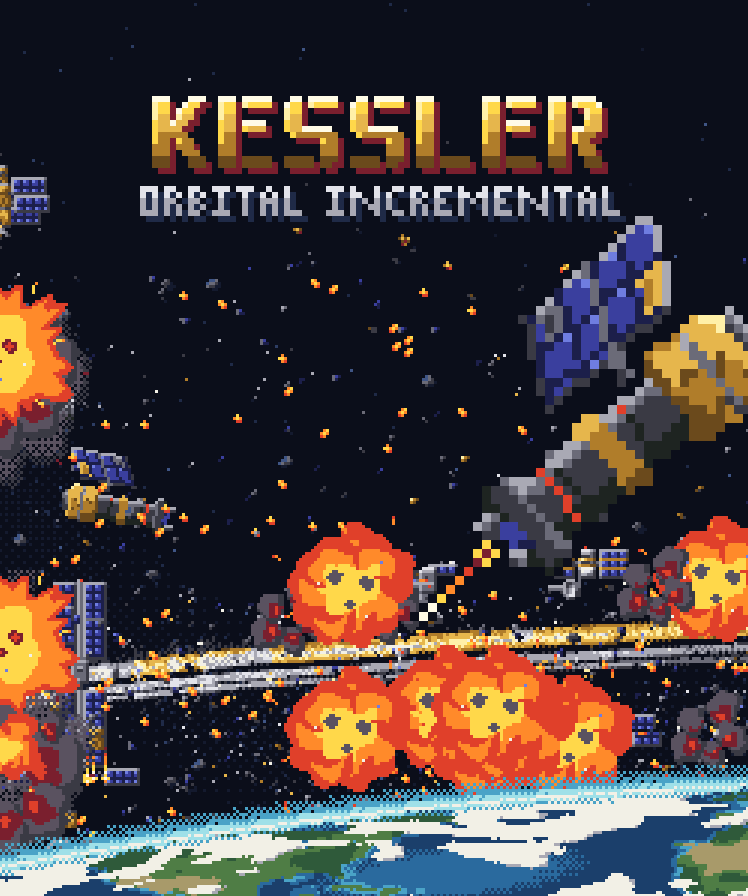
1983: a killer satellite is put into orbit, then forgotten. 2041: it wakes up, and everything circling the Earth becomes a target. One shot, a cloud of debris, a chain reaction. An incremental pixel-art game where you set off the Kessler syndrome.
About the game
1983. A top-secret military satellite, KESSLER-1, is put into orbit to take out enemy satellites. It is never switched on. Everyone forgets about it.
2041. It wakes up. Its orders haven’t changed.
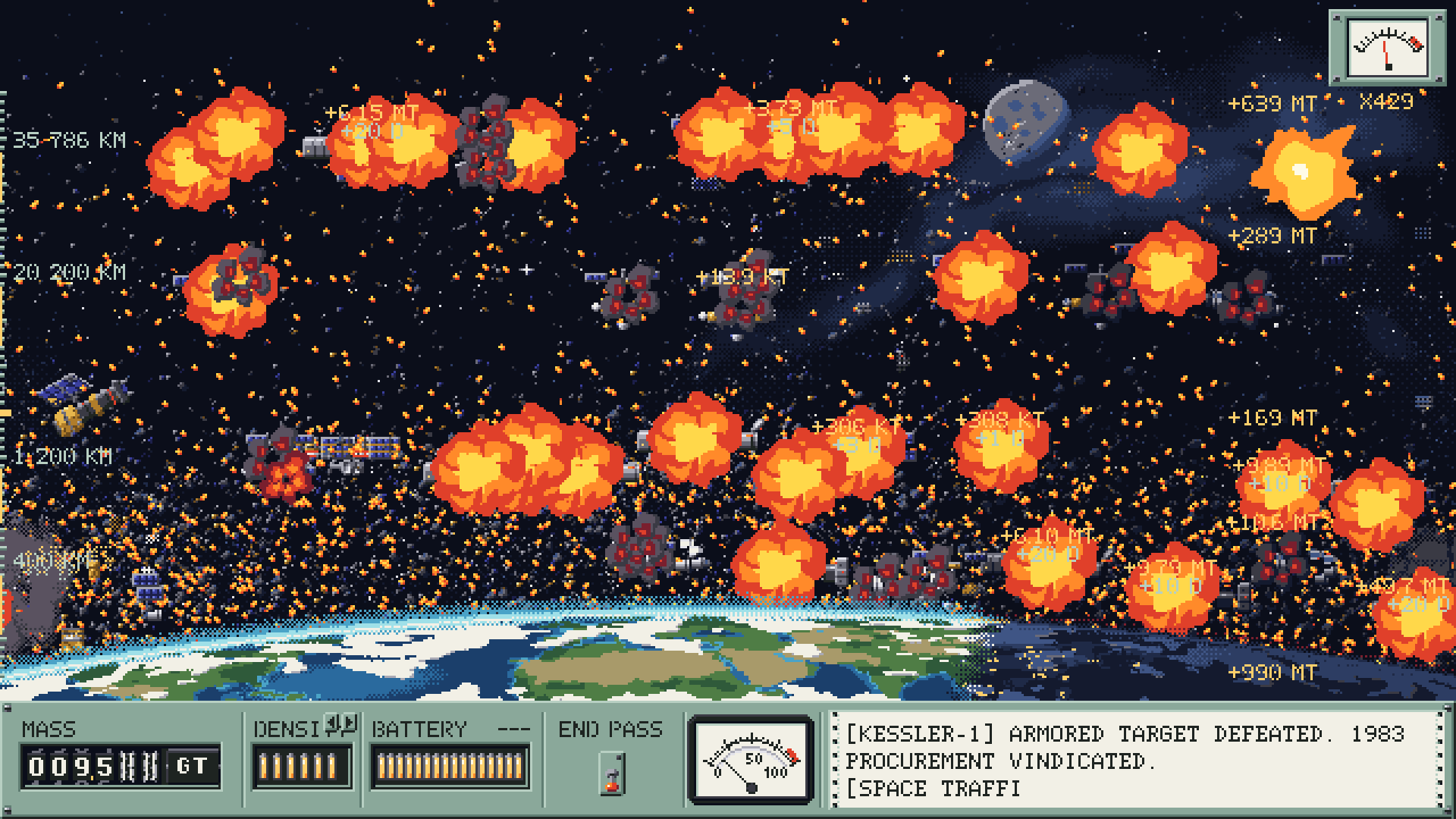
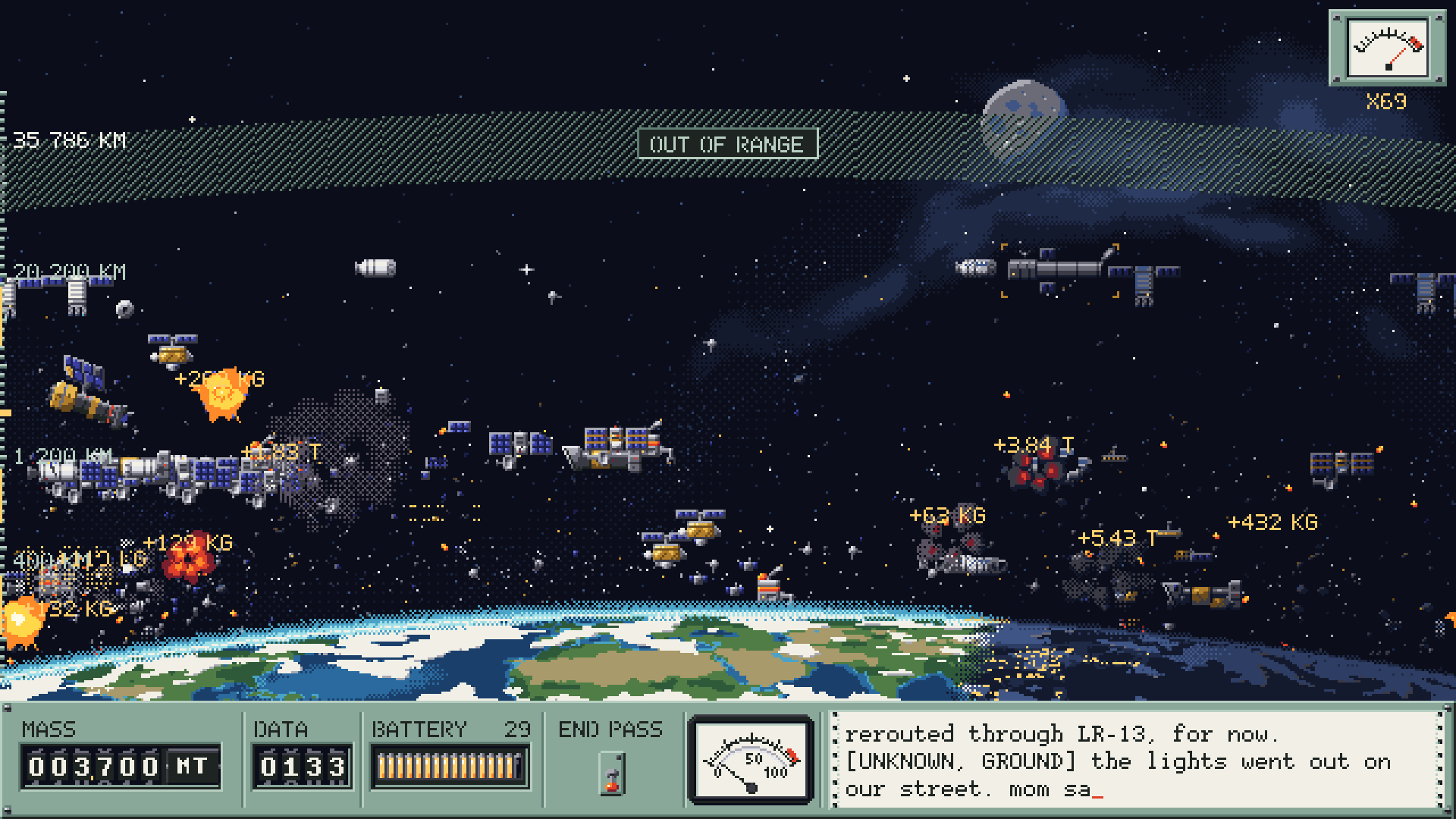
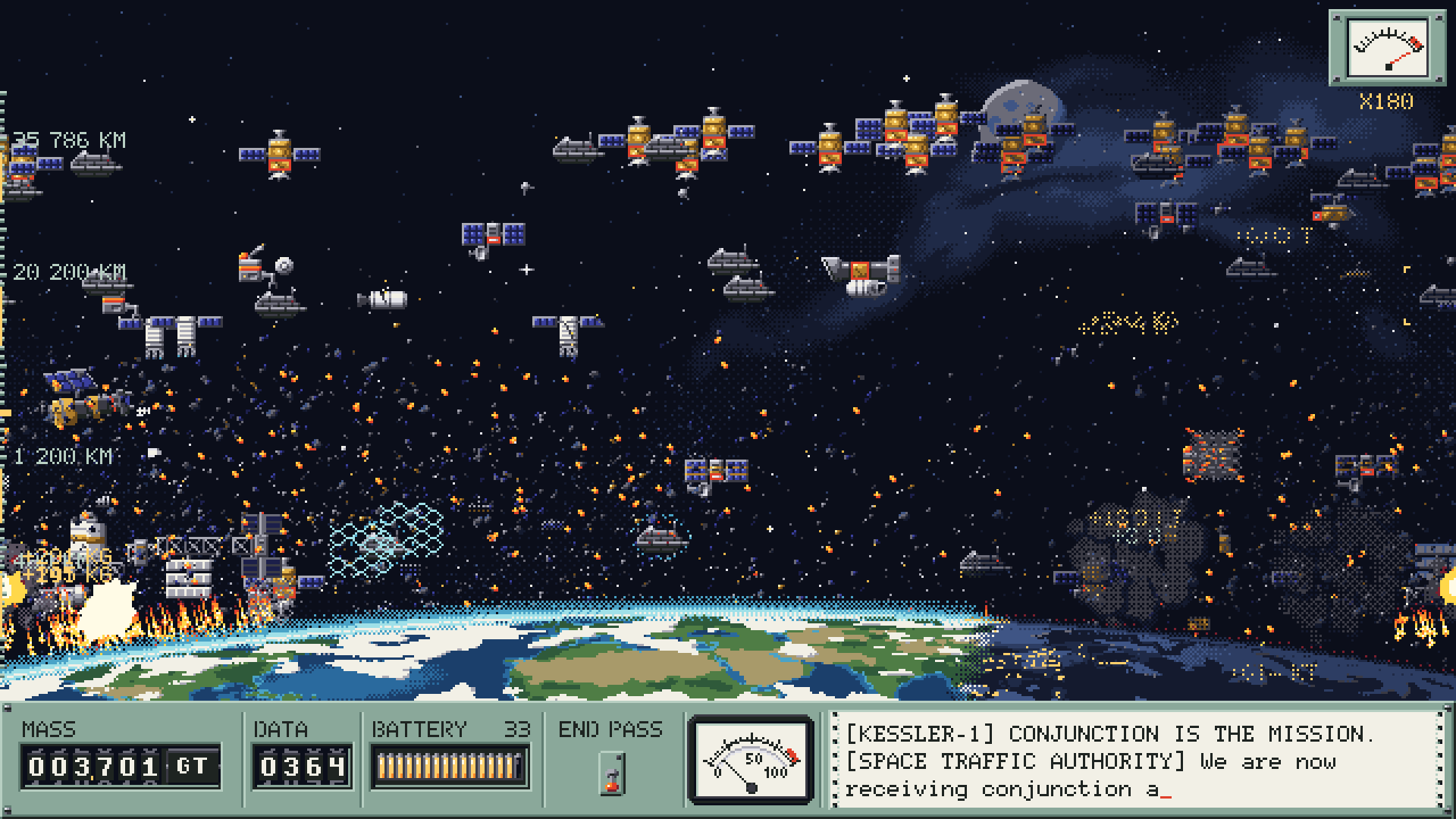
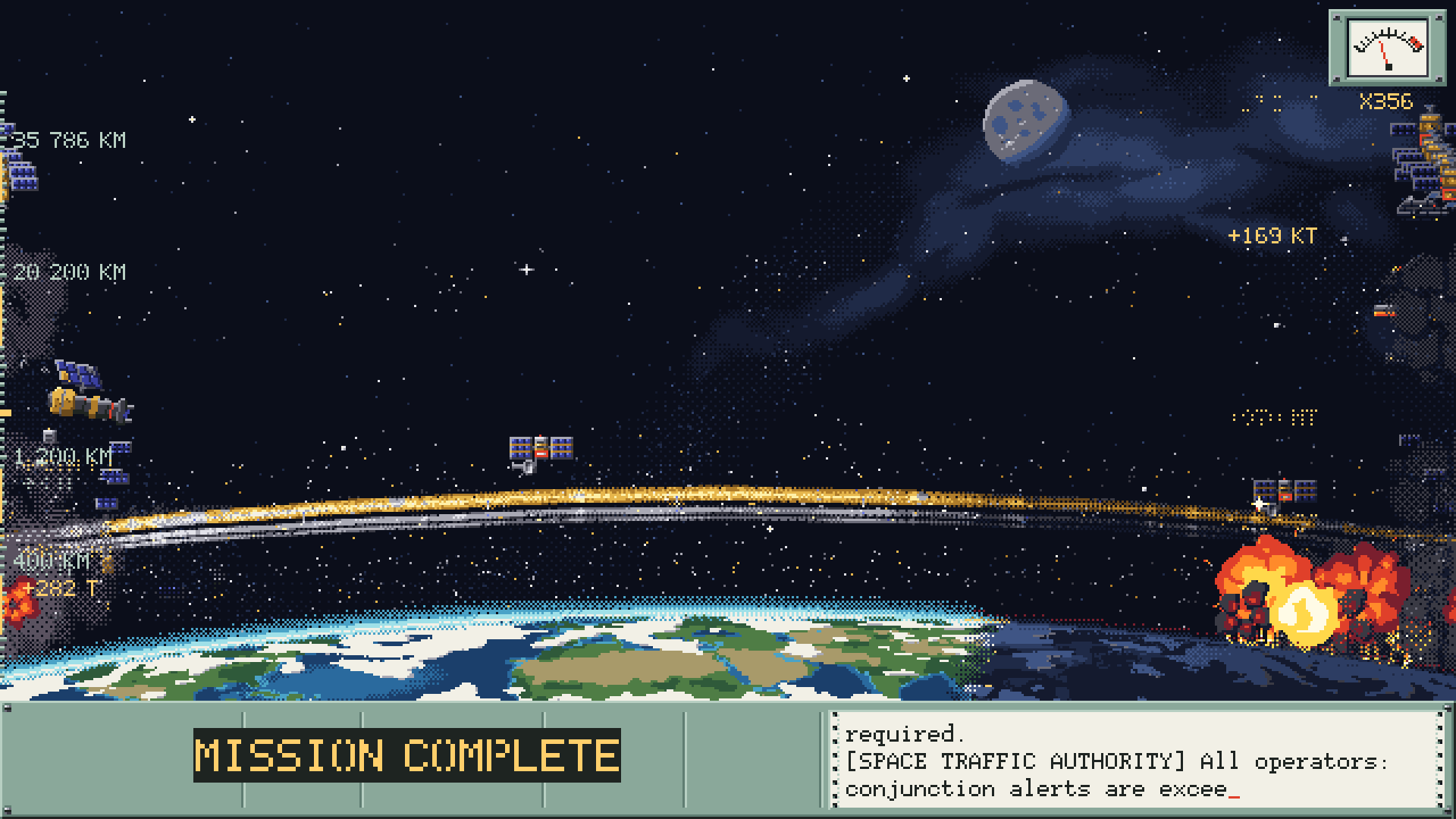
One cannon, a dying battery and thousands of targets. Every satellite you hit bursts into debris. Every piece of debris hits another. And the orbit starts tearing itself apart.
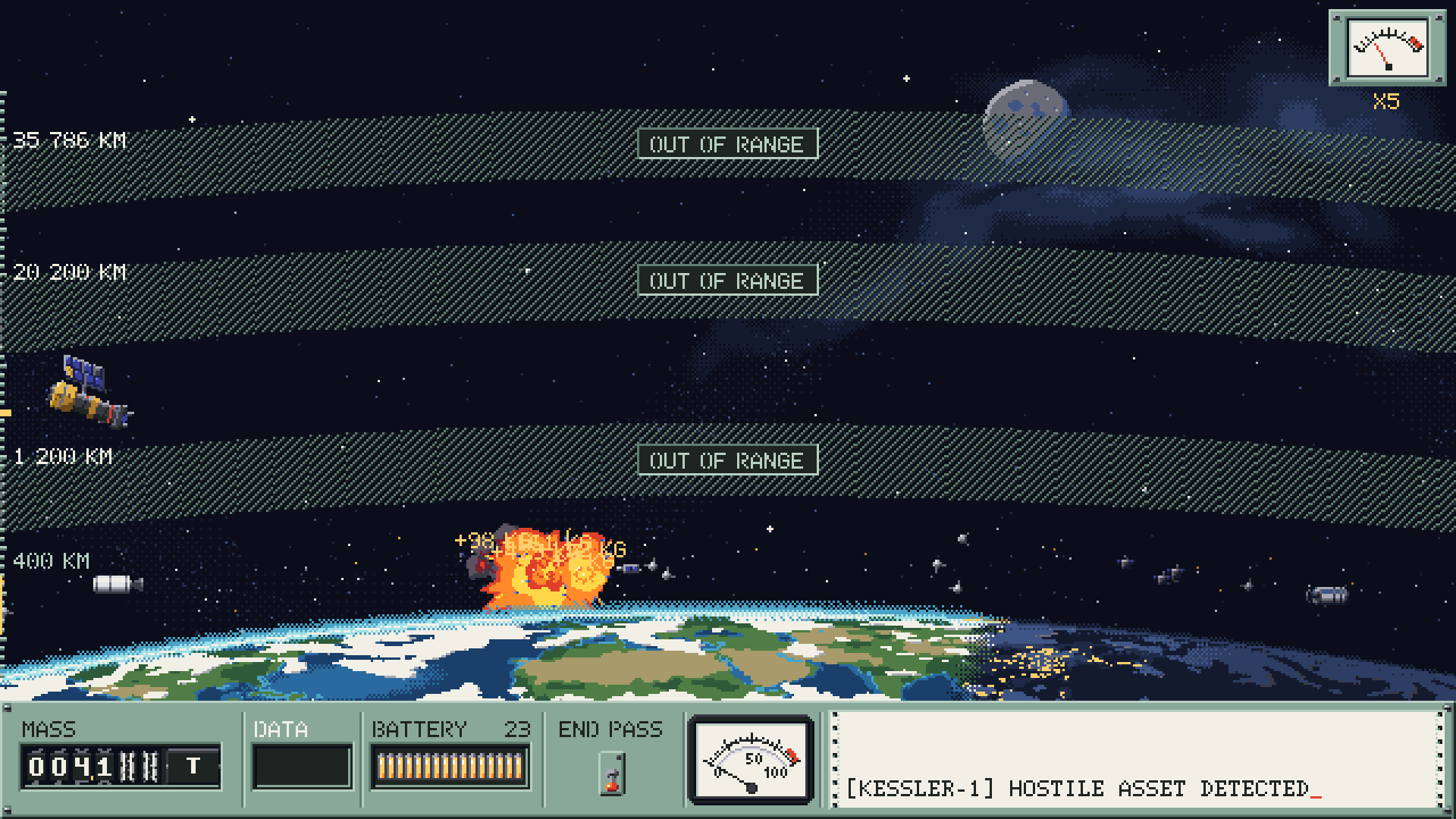
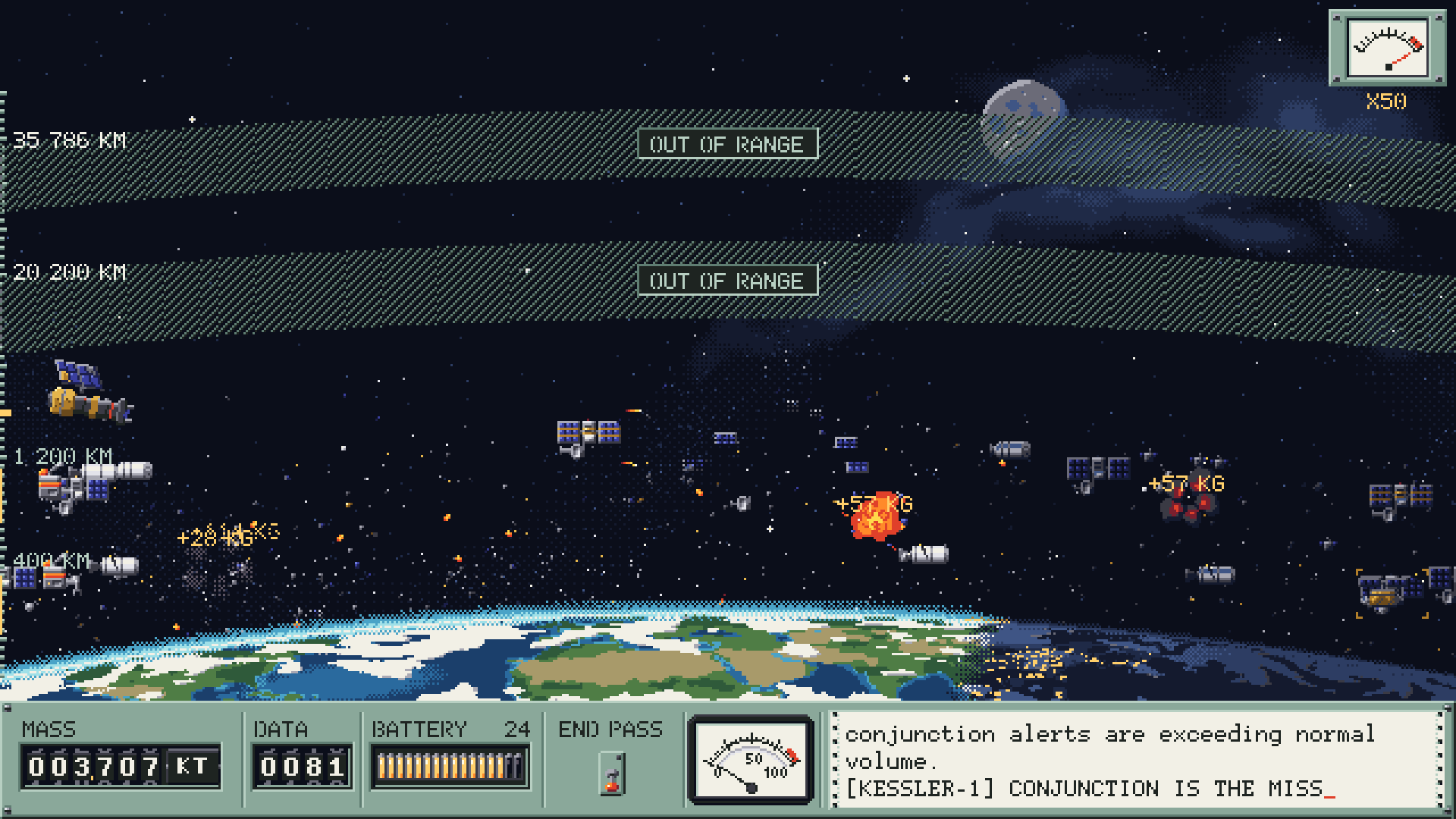
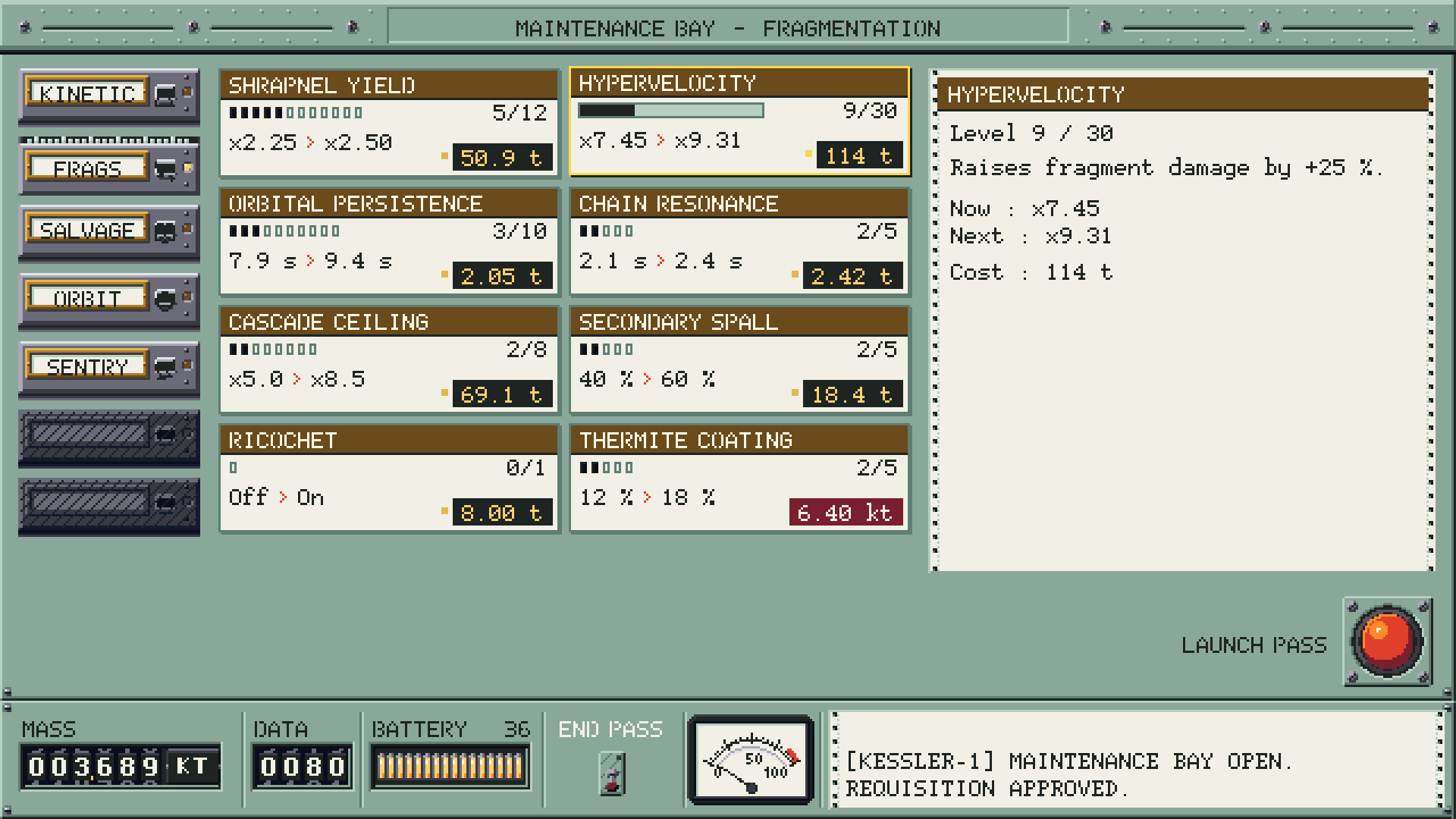
Aim, fire once, then watch. Fragments fly at orbital speed and smash into everything in their path. Between passes, KESSLER-1 refits in its maintenance bay: dozens of upgrades on punched cards, from heavier slugs to incendiary debris and hijacked satellites. From 400 km up to geostationary orbit, every new altitude opens up new targets, up to the Concorde space station.
Down on the ground, messages come in over an old telex. Customer support apologizes for the inconvenience. Space traffic control starts to panic. KESSLER-1 replies in 1983 military protocol.
The Kessler syndrome is a real scenario, proposed by NASA scientist Donald J. Kessler in 1978: past a certain density, collisions between objects in orbit produce debris that causes more collisions, until some orbits become unusable.
Features
- A complete incremental game of about 3 to 4 hours, with a real ending
- Every fragment is a projectile: debris keeps its orbital speed and hits whatever crosses its path
- Real orbits, from 400 km up to geostationary orbit at 35,786 km
- Punched-card upgrades, shot modifiers and prestige orbits
- Hand-drawn 640×360 pixel art in a strict 35-colour palette, displayed pixel-perfect
- A dry, ironic story told by telex
- Free mode after the ending: every upgrade maxed, endless launches, a density slider
- Steam achievements, 30 interface languages
Trailer
Screenshots
- All screenshots
Download ZIP
Logo & icon
- Logos and icons
Download ZIP




Key art & capsules
- Key art and store capsules
Download ZIP
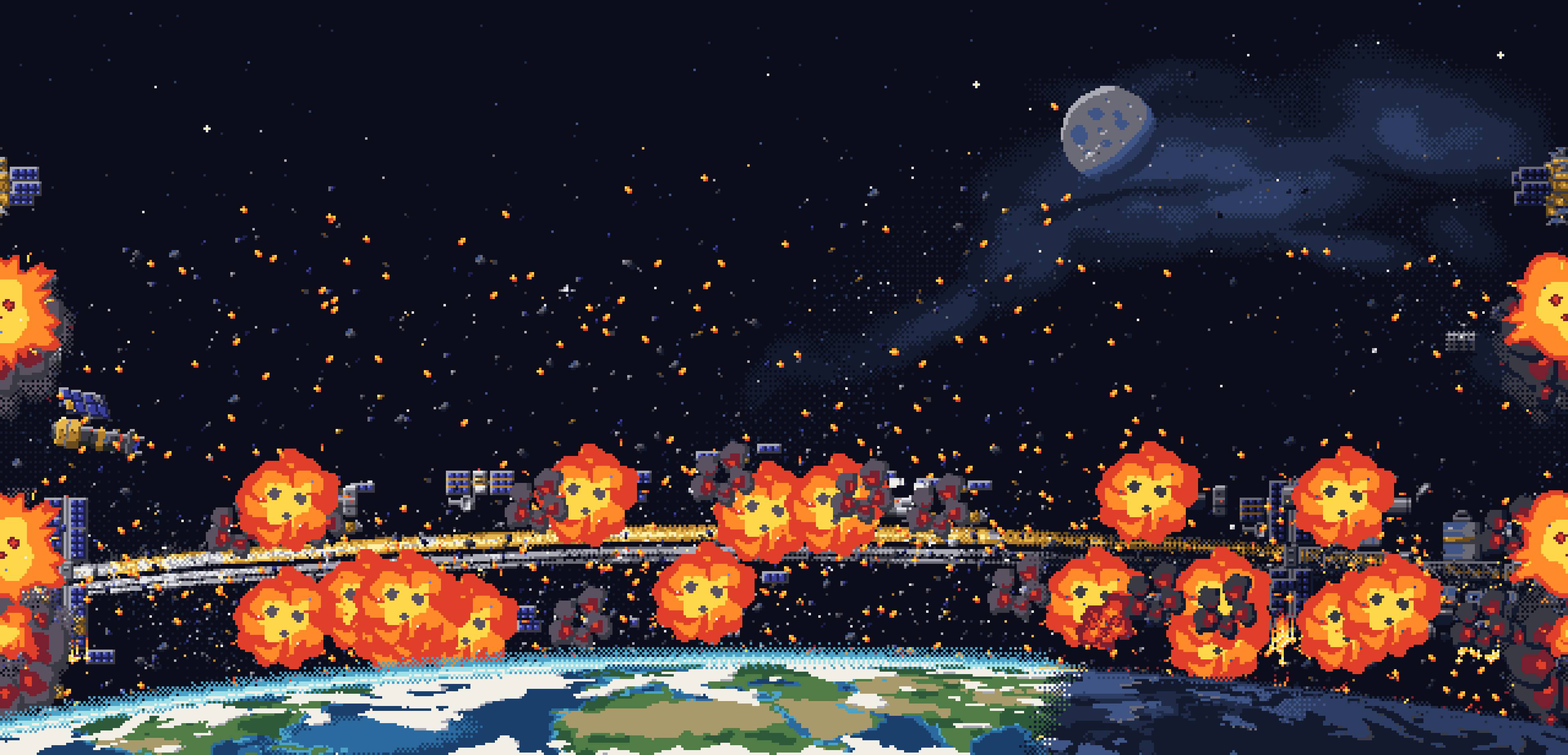
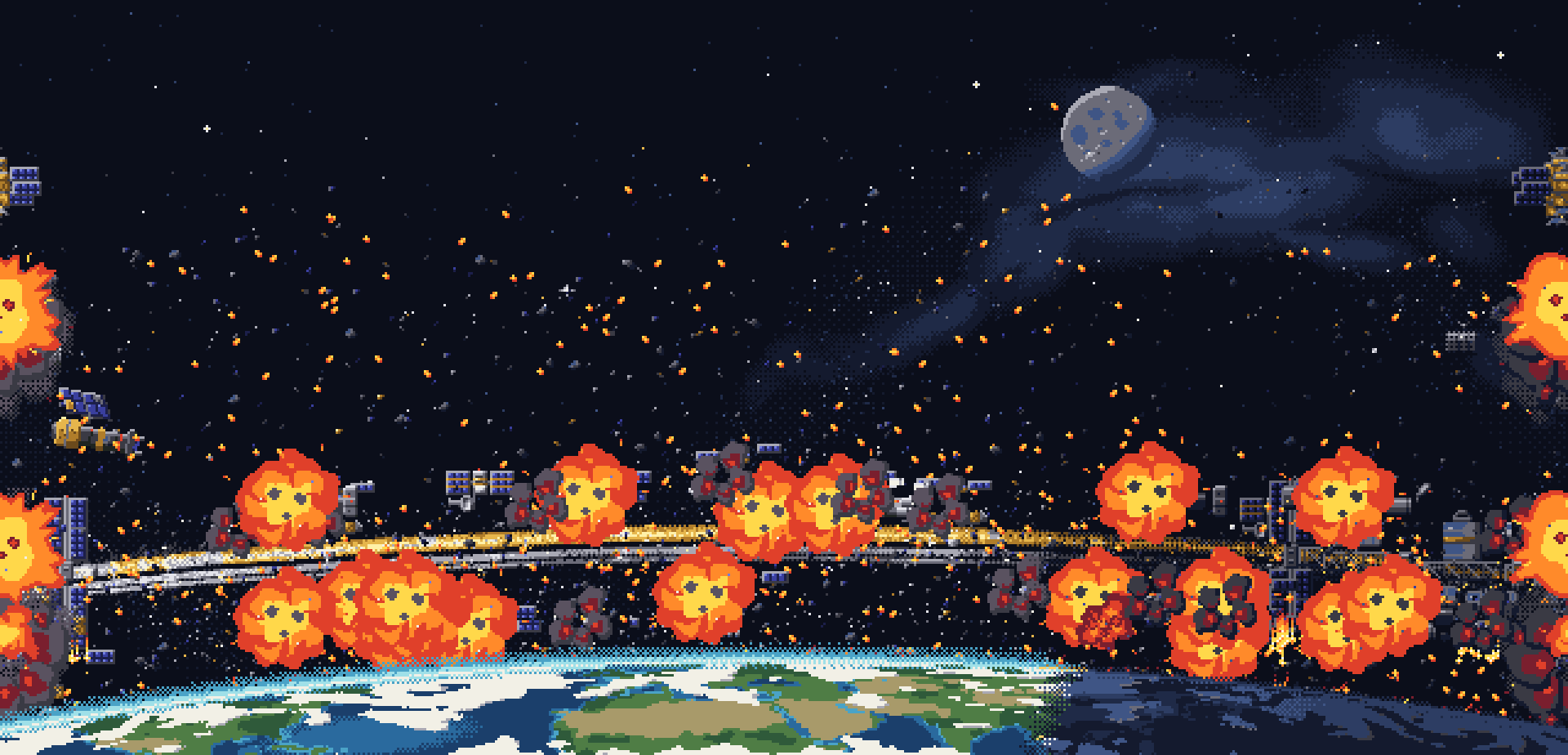
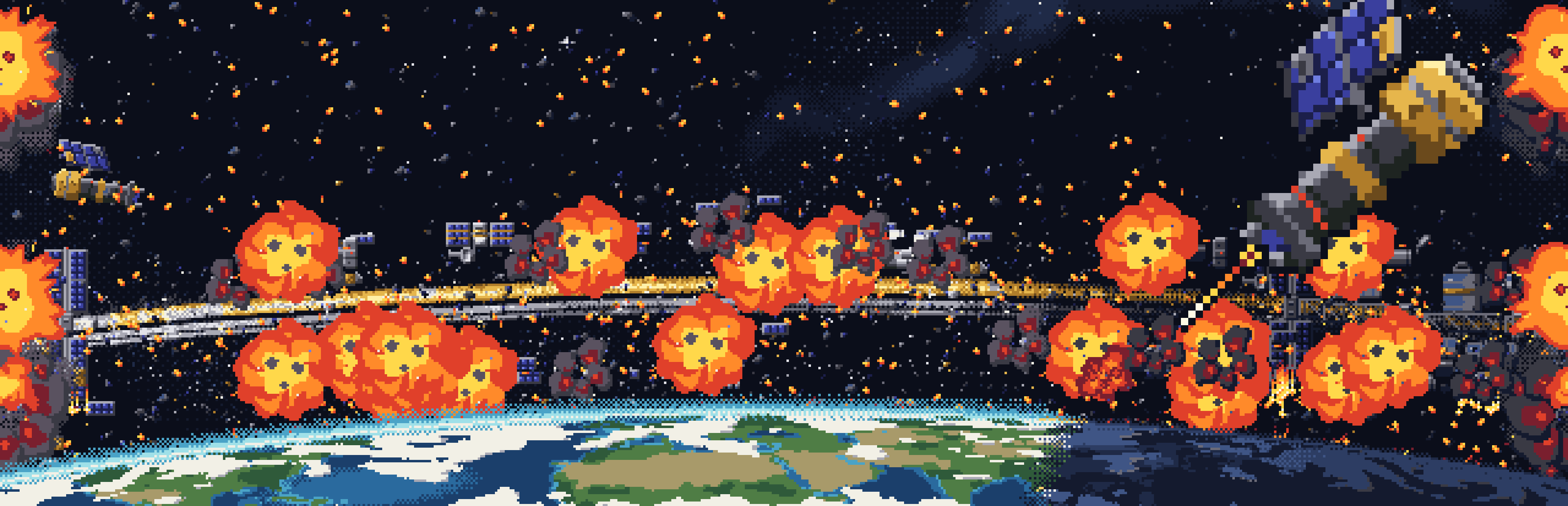
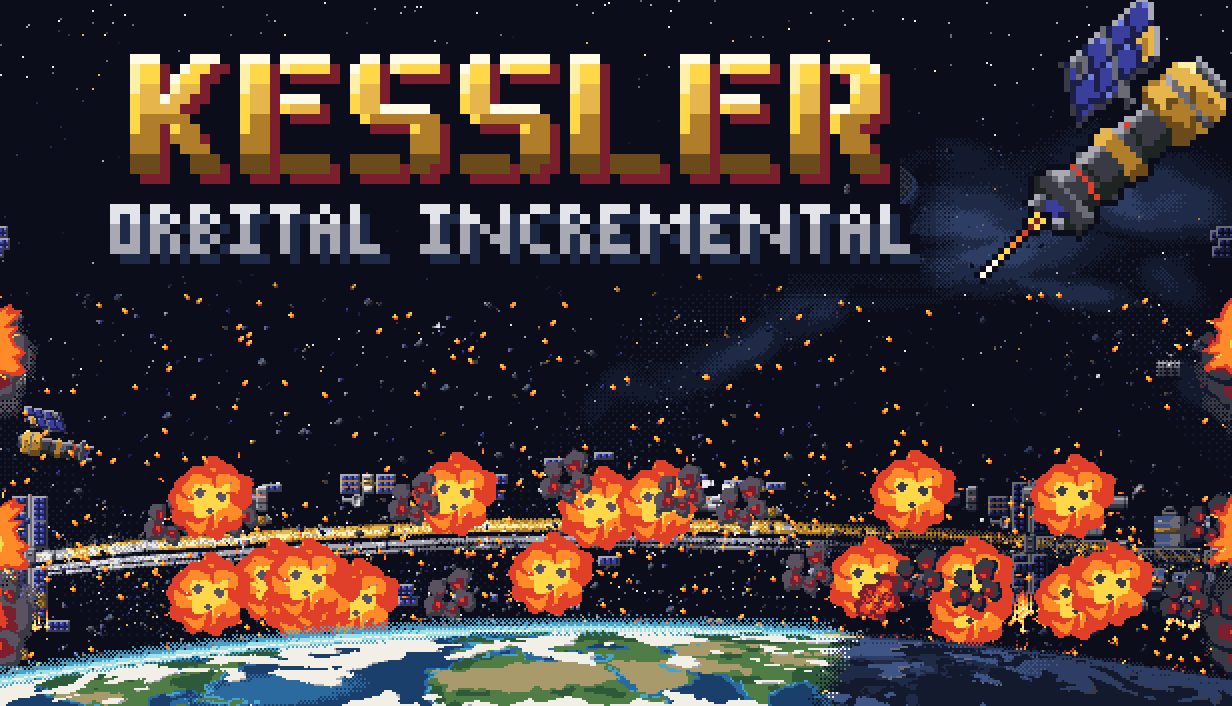
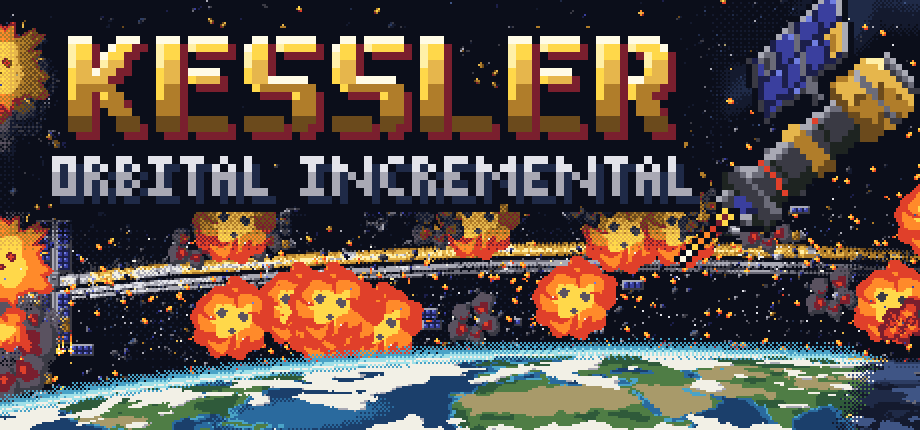


Animated clips
Short silent loops of gameplay, 1232×308 WEBM (VP9), as used on the Steam page.
Languages
English, French, German, Italian, Spanish (Spain), Spanish (Latin America), Portuguese (Brazil), Portuguese (Portugal), Dutch, Danish, Swedish, Norwegian, Finnish, Polish, Czech, Hungarian, Romanian, Bulgarian, Russian, Ukrainian, Greek, Turkish, Indonesian, Malay, Vietnamese, Thai, Japanese, Korean, Simplified Chinese, Traditional Chinese.
About Periapsis Works
Periapsis Works is a small independent game studio from Switzerland, making compact PC games built on simple rules and big chain reactions. KESSLER: Orbital Incremental is its first game.
Studio logos and fact sheet: periapsisworks.com/press.
Contact
Press, key requests and interviews: contact@periapsisworks.com